Business Needs It? Sorted: Created for SMEs, SME Bank Unveils a Technological Leap
A new mobile app, even more convenient online banking, and newly launched business payment cards – SME Bank, a digital Lithuanian-capital neobank created for small and medium-sized enterprises (SMEs), enters a new phase. With the brand promise "Business Needs It? Sorted.", the bank challenges the sector's traditional sluggishness: accounts are opened in a single day, and financing decisions are delivered within 24 hours. Modern technology paired with dedicated personal account management enables businesses to scale without bureaucratic barriers.
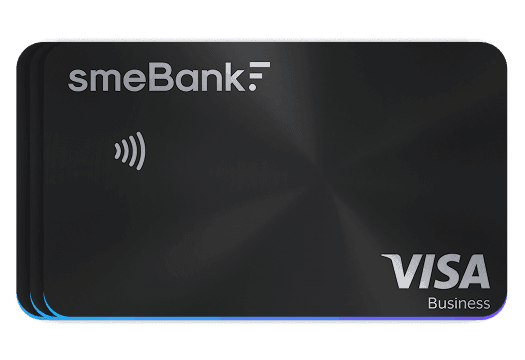
SME Bank offers SMEs a one-stop package of everyday banking and financing services tailored precisely to the needs of growing companies. Alongside standard services, long-awaited business payment cards make their debut, easily ordered via both the updated website and the new mobile app, available on the App Store and Google Play.
Companies will no longer have to struggle with bureaucracy: Know Your Customer (KYC) onboarding is conducted once at the company level, eliminating the need to re-verify each employee individually. Employees simply verify their identity on their smartphone, and a virtual card is issued in under 60 seconds.

Vaidotas Cucėnas, COO at SME Bank
These digital upgrades give businesses direct access to leasing and foreign exchange (FX) calculators with live currency rates, alongside an intuitive and quick financing application process. This ensures operational efficiency and tangible cost control: SEPA instant payments settle in just 15 seconds and are free of charge within core service plans, while international transactions are processed at a flat fee of €9. Furthermore, clients never have to navigate automated call centers – every company is assigned a dedicated manager, financing decisions are delivered within 24 hours, and accounts can be opened in a single day, even via smartphone.

Tomas Smalakys, CIO at SME Bank
"Building the bank's core architecture and launching a new technology base without any system downtime was a serious engineering challenge. Such a change marks a strategic turning point – we are evolving from a loan expert into a full-fledged digital, technology-driven business banking partner. For clients, this means fast, seamless, and modern everyday banking aligned to the real tempo of their business," says Tomas Smalakys, Chief Technology Officer at SME Bank.
Built Specifically for SMEs
As Vaidotas Cucėnas, Chief Operating Officer of the bank, explains, the roots of SME Bank lie in the alternative financing market, and in 2021, upon obtaining a European Central Bank (ECB) banking license, the first Lithuanian-capital neobank for business was launched under the supervision of the Bank of Lithuania.
"Over several years of operation, we have proven that we represent business interests without the bureaucratic inertia typical of legacy banks. We have also expanded our geography: SME Bank currently operates in all three Baltic states, Finland, and the Netherlands. Alongside services for SMEs, the bank is strengthening its positions in the European payments ecosystem and providing safeguarding accounts for electronic money and payment institutions," he notes.
The pace of growth and resilience are illustrated by operational statistics: in 2025, the total asset value of SME Bank increased approximately 2.5 times (146.5%) – from €184.5 million to €454.7 million. Client deposits expanded from €169.9 million to €428.1 million, while the total loan portfolio reached €147 million. Over the same period, Tier 1 capital surged 139.6% to €19.05 million, and interest income grew 35% to €14.6 million. According to Bank of Lithuania data, SME Bank ranks 7th by total assets among the 13 banks operating in the country (excluding foreign bank branches).
In March 2026, the bank was included in the prestigious FT 1000 ranking of Europe’s fastest-growing companies compiled by the Financial Times and Statista.
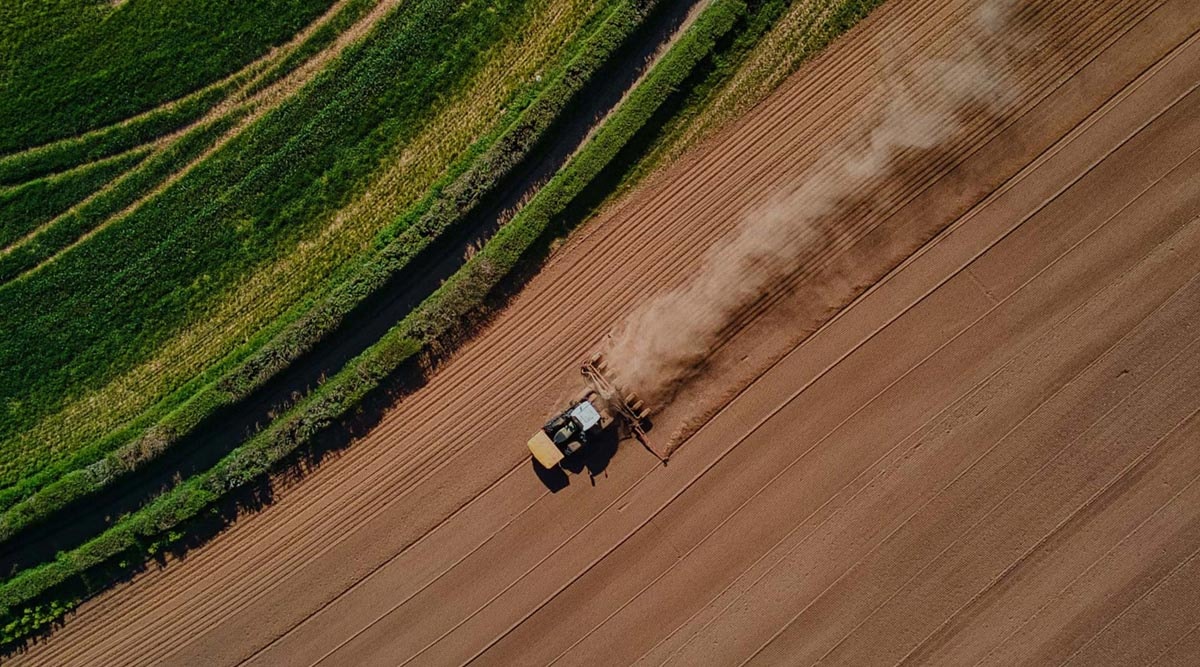
"Businesses don't need endless talks or procedures lasting for months – they need equipment purchased on time, hectares seeded, or working capital to fulfill a new order. We are a bank purposefully created for SMEs to meet their practical demands and grow together while building a long-term partnership," states V. Cucėnas.
A Flexible Approach to Financing
The bank's commitment to building a long-term and sustainable partnership with business is reflected in its credit structuring models. One of the biggest obstacles for a fast-growing business is the lack of tangible collateral: traditional banks demand real estate (RE) mortgages, leaving companies that lack it or do not wish to freeze it on the sidelines.
SME Bank removes this barrier through close cooperation with the European Investment Fund (EIF) and Lithuania's national development bank, ILTE. Risk-sharing instruments allow the bank to assume higher project risk, making SME financing accessible even without real estate: the equipment being purchased, together with the guarantee, can serve as loan collateral. In addition, the partnership directly reduces the cost of borrowing – the standard bank margin drops from the usual 5% down to 4% + EURIBOR with the guarantee. More than 400 businesses have already felt the value of such assistance by securing more favorable financing, and at the end of last year, the EIF-guaranteed loan portfolio alone exceeded €16.6 million.
Under these guarantee frameworks, investment loans of up to €6 million are available, financing up to 80% of project CapEx (requiring just a 20% equity contribution) with repayment tenors extending up to 25 years structured around real cash flows. This enables companies to execute ambitious expansion plans without undue financial strain.
A Smarter Way to Grow
Alongside working capital, SMEs increasingly require long-term instruments for strategic projects. For example, with the expansion of renewable energy capacity in Lithuania, businesses face grid capacity constraints and price fluctuations on the power exchange. Besides making large capital investments, business owners previously had to negotiate separately with contractors, technology manufacturers, and banks.
In response, SME Bank launched an integrated, turnkey financing solution for industrial Battery Energy Storage Systems (BESS), enabling businesses to turn sustainable energy CapEx into a dual revenue stream. Partnering with Saulės Grąža, one of the country's leading renewable developers, the bank created an end-to-end framework uniting technical audits, system design, EPC contracting, and digital financing.
BESS technology opens up two independent revenue streams for business: electricity price arbitrage and grid frequency stabilization services for the system operator. Leveraging EIF sustainability guarantees under the InvestEU programme, the installed BESS equipment itself acts as loan collateral. The bank provides up to €6 million in financing for the project (up to 80% of the CapEx value) for a term of up to 10 years, with a margin starting from 4% + EURIBOR.
The effectiveness of the model is confirmed by closed deals: SME Bank has already financed two major projects with a combined value of €14.27 million. Among them are a €6.7 million solar park (82% bank loan, 15-year term with an EIF guarantee) and an industrial BESS system worth €7.57 million (80% bank loan, repayment schedule exceeding 9 years).
Newsletter